

Italian marble has long been regarded as the gold standard of natural stone. From the majestic quarries of Carrara to the elegant veins of Calacatta and Statuario, Italian marble represents purity, craftsmanship, and timeless luxury. However, as demand for premium marble grows, so does the circulation of chemically enhanced or misrepresented stones in the market. Many buyers today unknowingly invest in materials that look impressive at first glance but fail to deliver long-term durability and authenticity.
Understanding how to distinguish genuine Italian marble from chemically treated alternatives is essential, not just for aesthetics, but for structural integrity, value, and longevity.
Why Italian Marble Is Often Imitated?
Authentic Italian marble is prized for its natural formation, subtle veining, and exceptional strength. Its quarrying process, geological purity, and controlled extraction make it a premium product worldwide. Because of this high demand, chemically treated stones are often marketed under Italian-sounding names or enhanced to resemble Italian marble.
These treatments may temporarily improve color, gloss, or uniformity, but they compromise the stone’s natural properties. Over time, such stones can fade, crack, stain easily, or lose their finish, revealing the difference between true marble and surface-level enhancements.
Understanding Chemical Treatments in Marble
Chemical treatments are often used to improve the appearance of lower-grade stone. Resin filling, artificial polishing compounds, dyes, and surface coatings can mask natural flaws or inconsistencies. While some stabilization processes are industry-accepted when disclosed transparently, deceptive treatments are intended to imitate the appearance of premium Italian marble without delivering its performance.
Resin-filled marble, for example, may look flawless initially but can yellow or crack over time. Dyed marble may lose its color when exposed to sunlight, moisture, or cleaning agents. These treatments alter the stone’s natural behavior and significantly reduce its lifespan.
Visual Cues That Reveal Authentic Italian Marble
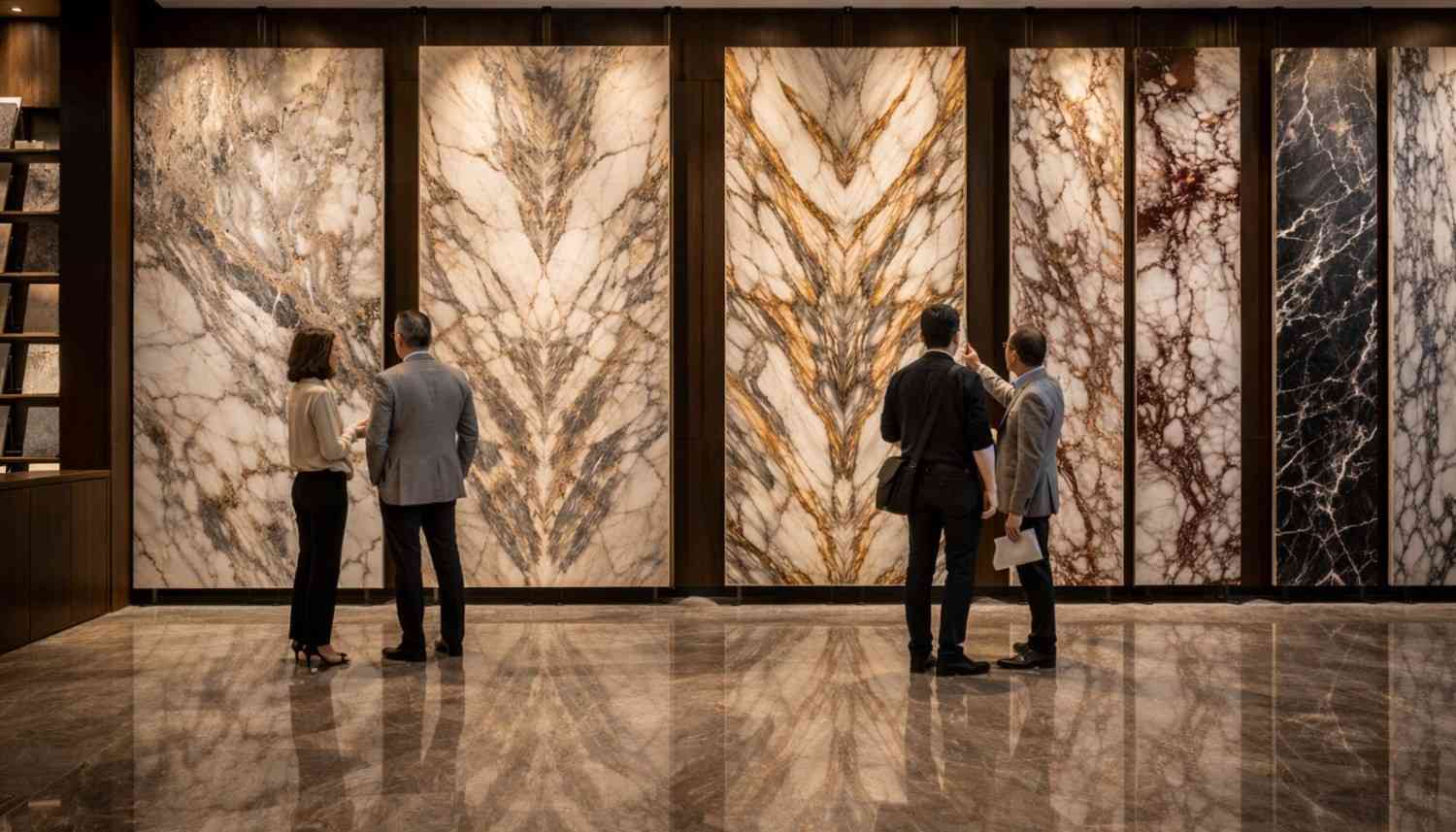
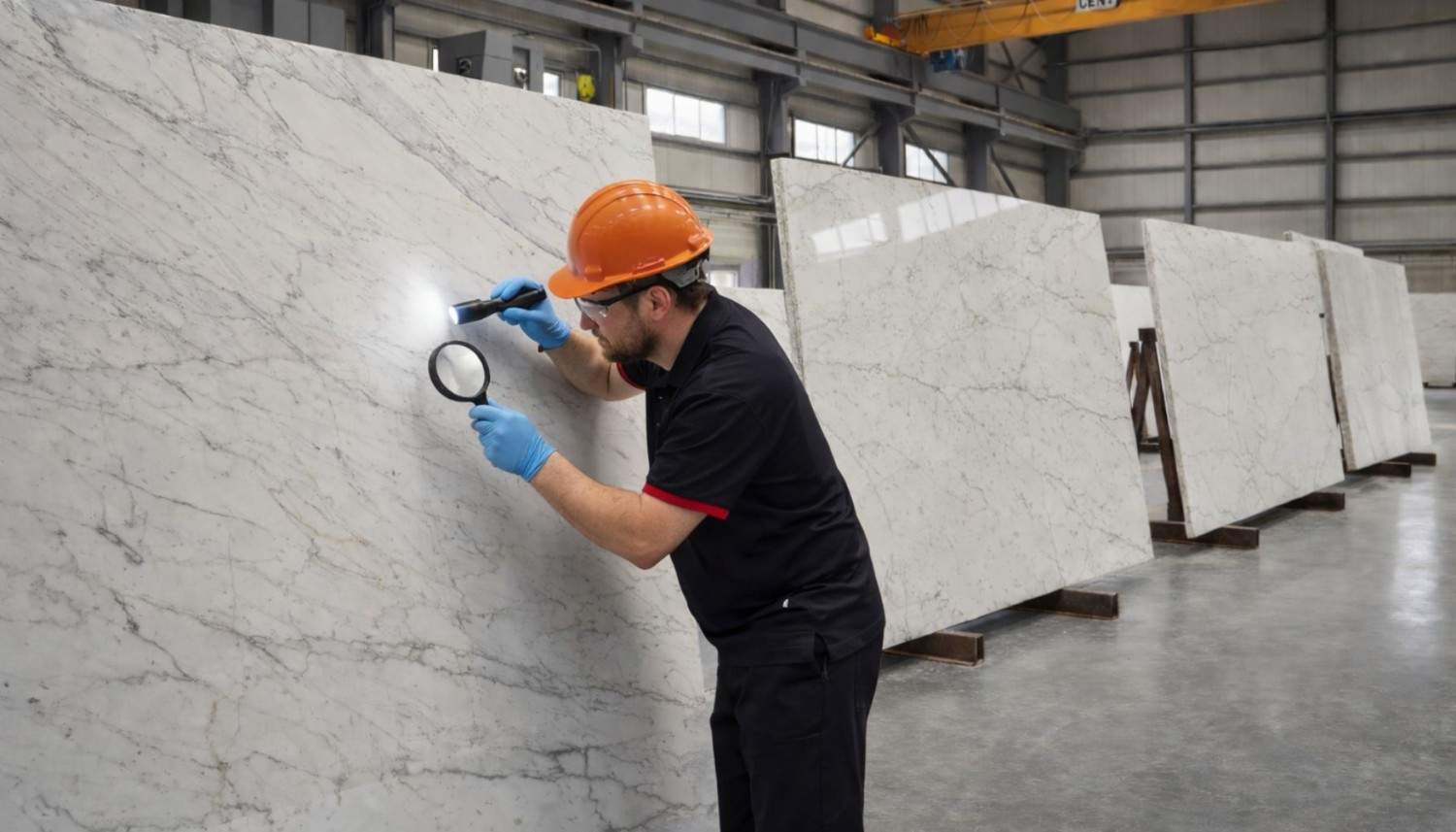
One of the clearest ways to identify genuine Italian marble is by closely examining its natural surface characteristics. Authentic stone carries visual depth and variation that cannot be perfectly replicated.
Key visual indicators include:
- Organic, irregular veining that flows naturally across the slab, never appearing repetitive or overly symmetrical
- Non-uniform patterns that vary from section to section rather than repeating mechanically
- Subtle tonal variations in colour, with gentle shifts in shade instead of flat or consistent colouring
- Natural imperfections that enhance character and indicate authenticity, not defects
If the surface appears too uniform or artificial, it often suggests chemical enhancement or an engineered alternative rather than true Italian marble.
Surface Feel and Finish
Touch is an underrated but powerful way to assess marble quality. Genuine Italian marble has a naturally cool, smooth surface that feels dense and solid. Chemically treated stones may feel slightly sticky, waxy, or overly glossy due to surface coatings.
Over-polished stones often reflect light unnaturally, creating a glass-like sheen rather than the soft, elegant glow of authentic marble. A natural polish allows the stone to breathe, whereas chemical coatings seal the surface and trap moisture inside.
Absorption Test: A Simple Authenticity Check
A basic water absorption test can quickly indicate the quality and authenticity of marble. Genuine Italian marble is naturally dense and has low porosity, which affects how it interacts with water.
When performing the test, observe the following:
- A few drops of water take time to seep in, indicating low porosity
- Absorption appears slow and even across the surface
- No immediate dark patches form on contact
Warning signs of treated or imitation marble include:
- Uneven absorption caused by resin-filled microcracks
- Rapid darkening of the surface
- Water beading unnaturally, suggesting sealants or synthetic coatings
These visible reactions help distinguish natural Italian marble from chemically enhanced or engineered alternatives.
Weight and Density Matter
Italian marble is known for its density and strength. When compared to chemically treated or lower-grade stones, authentic Italian marble slabs are noticeably heavier and more compact. Lighter stones may indicate excessive resin filling or inferior raw material.
Density plays a crucial role in long-term durability, especially for flooring, countertops, and high-traffic areas. A heavier slab typically means better compression strength and resistance to wear.
The Importance of Quarry and Origin Certification
One of the most reliable ways to identify genuine Italian marble is through documentation. Reputable suppliers provide clear information about the quarry of origin, including the extraction region, grade, and quality classification.
Authentic Italian marble is often accompanied by origin certificates, batch numbers, and import documentation. If a supplier cannot trace the stone back to an Italian quarry, it is likely not genuine, regardless of its name or appearance.
UV Light and Aging Tests
Over time, chemically treated marble reveals its weaknesses. Under UV light or prolonged exposure to sunlight, dyed stones may fade or discolor. Resin-filled surfaces can yellow, crack, or peel, especially in warm or humid environments.
Genuine Italian marble, on the other hand, ages gracefully. Its appearance remains consistent over decades, developing character rather than deterioration. This long-term stability is one of the strongest indicators of authenticity.
Why Chemical Treatments Impact Performance?
While chemical treatments may reduce upfront costs, they compromise performance. Treated marble is more prone to staining, heat damage, and surface degradation. Repairs are often difficult, as polishing or grinding can remove the treated layer and expose underlying flaws.
Authentic Italian marble responds well to maintenance and refinishing. Even after years of use, it can be restored to its original beauty, something chemically enhanced stones cannot offer.
Buying from Trusted Sources Makes All the Difference
The most effective way to avoid counterfeit marble is to work with established suppliers who prioritize transparency and quality control. Trusted suppliers conduct rigorous inspections, source directly from renowned quarries, and educate buyers on stone characteristics rather than masking them.
Reputable brands also invest in ethical sourcing, advanced processing facilities, and proper finishing techniques that preserve the stone’s natural integrity.
Why Knowledge Protects Your Investment?
Italian marble is more than a surface; it is an investment in design, heritage, and durability. Understanding how to identify genuine stone empowers buyers to make informed decisions and avoid costly mistakes.
In an industry where appearances can be deceptive, knowledge becomes the most powerful tool. When you know what to look for, authentic Italian marble stands apart, quietly confident, naturally elegant, and unmistakably real.
Conclusion: Authenticity Is Always Visible Over Time
True Italian marble does not rely on chemical tricks to impress. Its beauty comes from nature, shaped by time and perfected through craftsmanship. While treated stones may mimic the look temporarily, authenticity always reveals itself with age.
By learning to recognize the signs of genuine Italian marble, its veining, density, finish, and provenance, you ensure that your space reflects true luxury, not imitation. In the world of natural stone, authenticity is not just seen; it is felt, tested, and trusted.
If you want the assurance of genuine Italian marble with complete transparency, working with an experienced and trusted supplier is essential. Classic Marble Company offers authenticated Italian marble sourced from renowned quarries, along with proper documentation and expert guidance. Their focus on quality over surface treatments ensures you invest in marble that retains its beauty, strength, and value for decades to come.