


In a country like India, where rising temperatures and long summers are a part of everyday life, the choice of building materials plays a far more important role than aesthetics alone. Long before air conditioners and smart cooling systems existed, Indian architecture relied on natural materials to regulate indoor temperatures. Among these, white marble has always stood out as a timeless solution. Often described as a “cool floor,” white marble does more than elevate interiors; it actively helps maintain thermal comfort within a space.
But why does white marble feel cooler underfoot even on the hottest days? The answer lies in science, geology, and centuries of architectural wisdom.
Understanding the Natural Cooling Properties of White Marble
White marble is a metamorphic stone formed under intense heat and pressure deep within the earth. Despite its dramatic formation process, marble possesses a unique molecular structure that allows it to absorb heat slowly and release it gradually. This low thermal conductivity is one of the primary reasons marble surfaces remain cool even when surrounding temperatures rise.
Unlike materials such as ceramic tiles or concrete, which heat up quickly and retain warmth, white marble resists rapid temperature changes. When sunlight or ambient heat enters a room, marble absorbs only a limited amount of that heat, preventing the indoor space from warming too quickly.
The Role of Light Reflection in Cooling Interiors
One of the most important scientific advantages of white marble lies in its high albedo, or reflectivity. White and light-colored surfaces reflect a significant portion of light and radiant heat rather than absorbing it. This property helps reduce heat gain within indoor spaces.
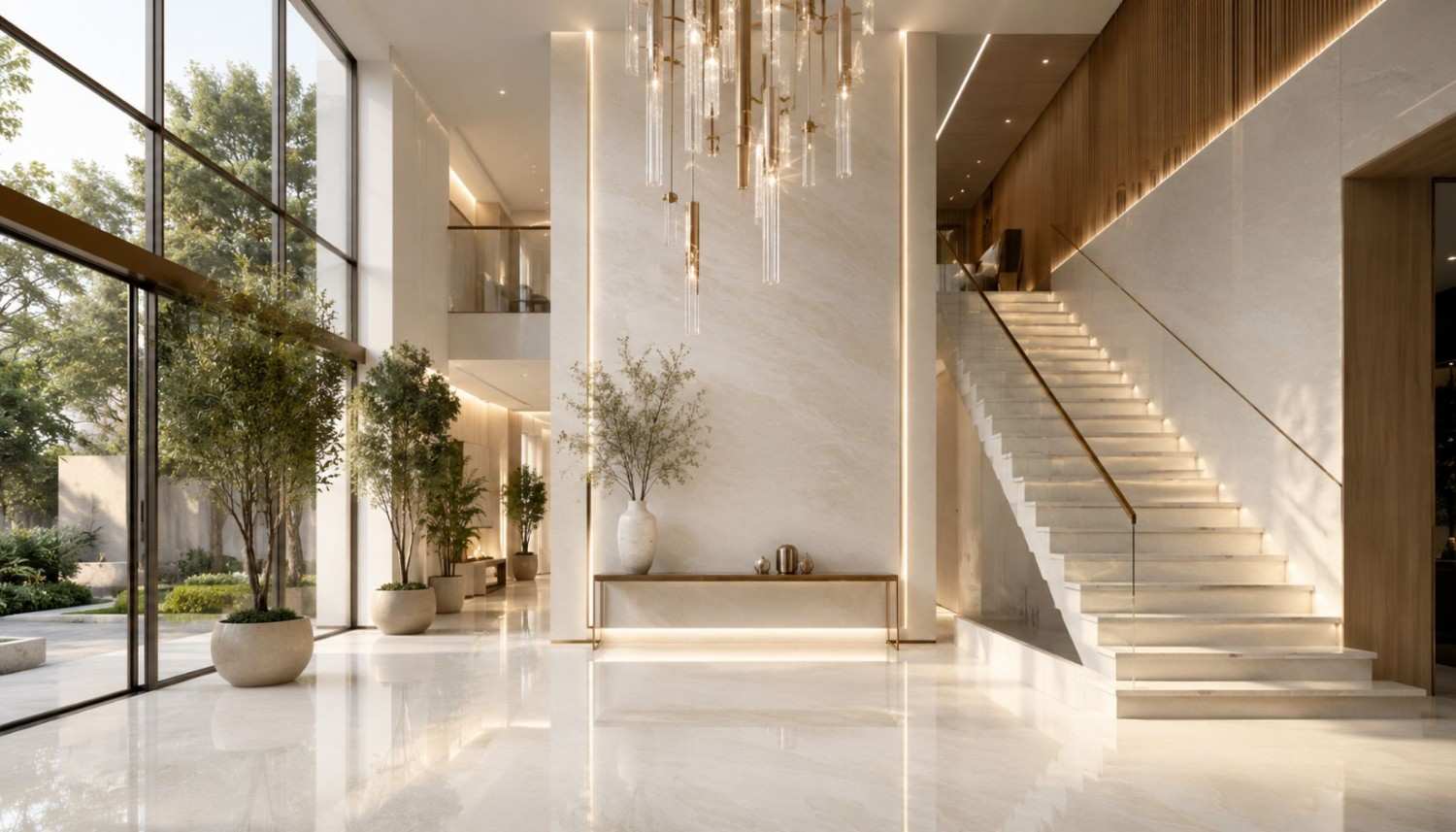
When used as flooring, wall cladding, or even staircases, white marble reflects both natural and artificial light. This not only enhances brightness but also minimizes the buildup of radiant heat, contributing to a cooler indoor environment throughout the day.
Why Marble Floors Feel Cool to the Touch?
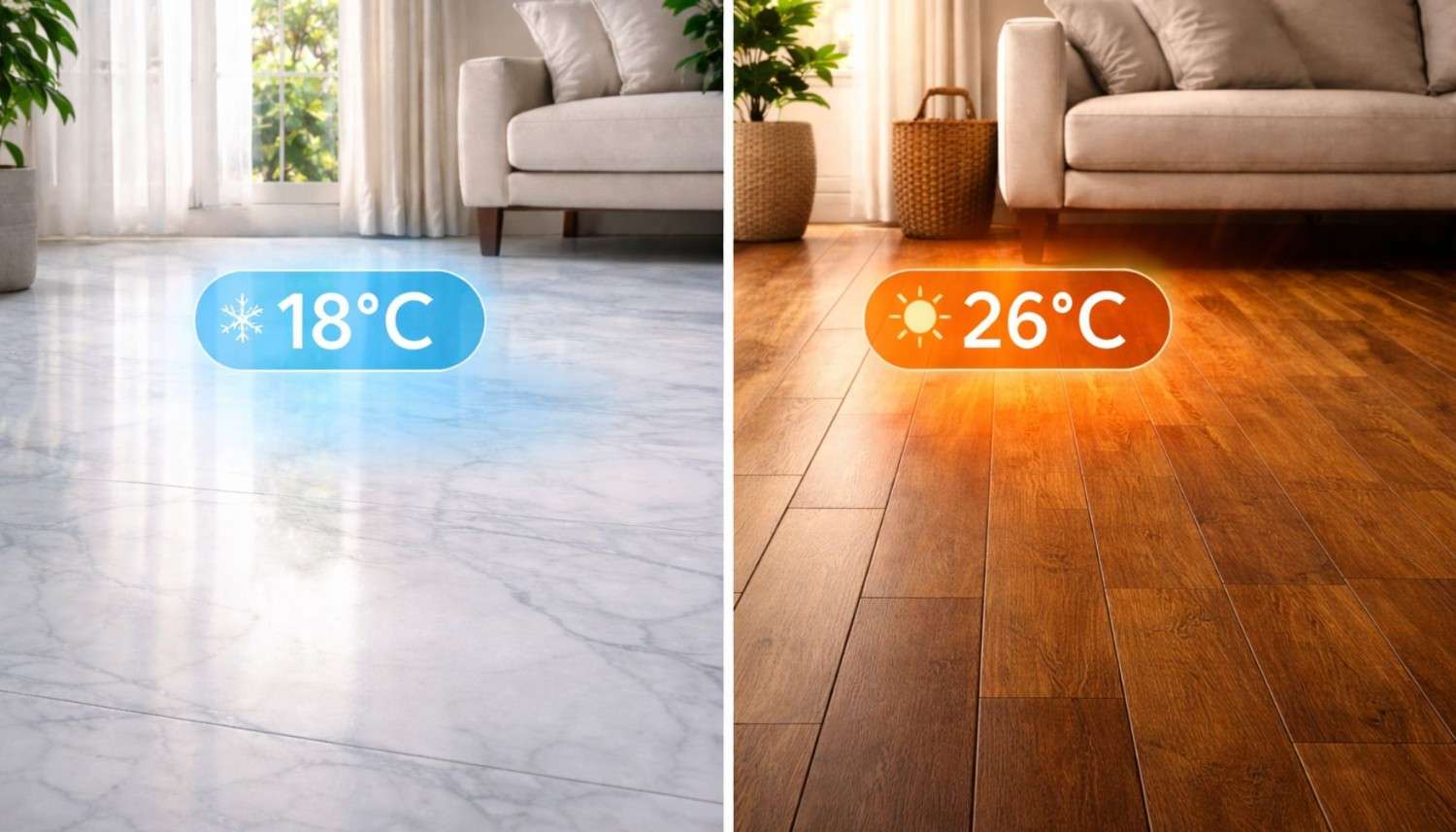
The “cool floor” sensation is not an illusion. It is a measurable physical response caused by the way marble interacts with heat. Marble’s dense structure allows it to absorb heat from the body the moment contact is made. When you walk barefoot on a marble floor, heat transfers from your skin into the stone, creating an immediate cooling sensation. The marble itself does not warm up quickly, which is why the surface continues to feel cool even after prolonged contact.
In simple physical terms, what’s happening is this:
- Heat always moves from a warmer surface (your skin) to a cooler one (the marble)
- Marble absorbs that heat efficiently due to its density
- The stone’s temperature changes very slowly, so the cooling effect lasts
This is why marble flooring is particularly well-suited to tropical climates, where passive cooling directly improves everyday comfort.
This is the only structurally sound way to include bullets here. Any other placement will feel forced.
Lessons from Traditional Indian Architecture
Historical Indian architecture provides clear, real-world proof of marble’s cooling properties. Iconic structures such as the Taj Mahal, Mughal palaces, Jain temples, and royal courtyards relied heavily on white marble to cope with extreme heat. These buildings were created long before air conditioning, yet they maintained comfortable indoor environments throughout the year.
The cooling effect came from a thoughtful combination of design elements:
- Extensive use of white marble flooring that absorbed heat without warming quickly
- High ceilings that allowed hot air to rise away from living spaces
- Cross-ventilation that encouraged continuous airflow
- Courtyards that reduce heat buildup and regulate temperature naturally
Together, these elements created interiors that stayed cool using passive design principles. This is why modern architects still study and reinterpret traditional Indian architecture when designing climate-responsive spaces today.
Energy Efficiency and Reduced Dependence on Air Conditioning
One of the biggest advantages of using white marble in modern homes is its contribution to energy efficiency. By maintaining lower ambient temperatures, marble flooring reduces the need for constant air conditioning. This leads to lower electricity consumption, reduced carbon footprint, and long-term cost savings.
In large residential spaces, hotels, museums, and luxury villas, white marble floors help stabilize indoor temperatures, allowing cooling systems to work more efficiently rather than continuously battling heat buildup.
White Marble vs Other Flooring Materials
Compared to wooden flooring, vinyl, or engineered tiles, white marble offers superior thermal comfort. Wood tends to insulate heat, making spaces warmer, while synthetic materials can trap heat and release it slowly, increasing indoor discomfort.
Ceramic tiles may offer some cooling benefits, but they lack the density, longevity, and reflective qualities of natural marble. White marble, especially premium varieties with fine grain and consistent coloration, delivers a balanced combination of aesthetics, durability, and thermal performance.
Indoor Air Comfort and Psychological Cooling
Beyond physical temperature control, white marble also contributes to psychological cooling. Bright, light-filled spaces naturally feel more open, airy, and calm. White marble enhances this effect by visually expanding interiors and reducing the sense of heat and congestion.
This psychological impact plays a significant role in luxury interiors, hospitality spaces, and wellness-focused architecture, where comfort is measured not just in degrees but in experience.
Ideal Applications for Maximizing the Cooling Effect
To fully benefit from the cooling properties of white marble, placement within a space is crucial. Different applications contribute in different ways, depending on how frequently the surface is touched and how much heat it is exposed to.
The most effective applications include:
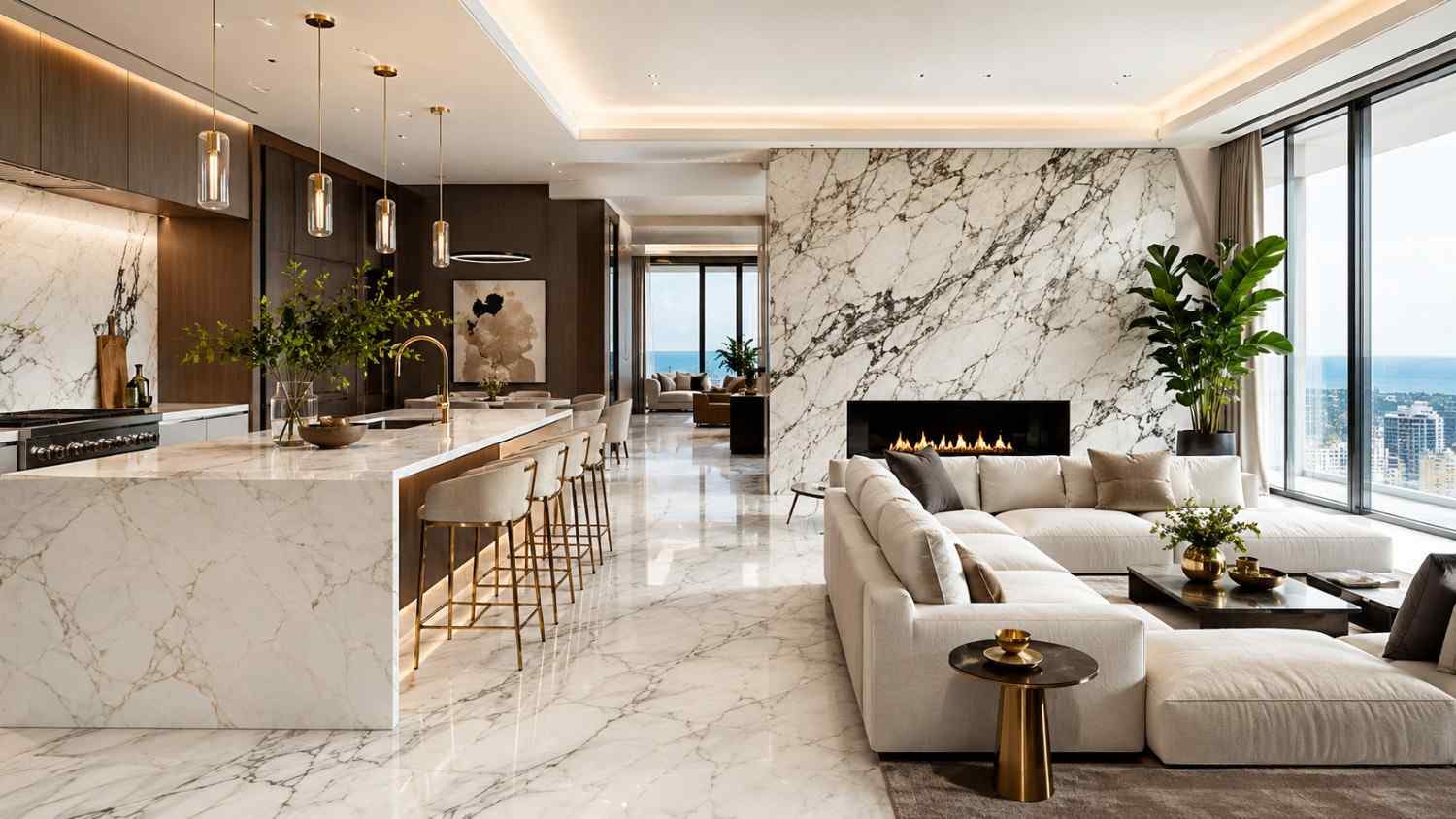
- Flooring in living rooms, bedrooms, corridors, and entryways, where constant contact helps draw heat away from the body
- Wall cladding in areas exposed to direct sunlight helps regulate surface temperatures and reduce heat gain
- Kitchens and bathrooms, where marble stays naturally cool while providing hygienic and moisture-resistant surfaces
When white marble is combined with natural ventilation, shading, and thoughtful spatial planning, it enhances overall thermal comfort while maintaining full design flexibility.
Sustainability and Long-Term Performance
White marble is not only naturally cooling but also environmentally responsible when sourced and processed ethically. Its long lifespan means fewer replacements, less waste, and reduced resource consumption over time. Unlike synthetic materials that degrade or discolor, marble retains its properties for decades.
From a sustainability standpoint, using marble aligns with passive cooling principles, reducing reliance on energy-intensive systems by leveraging natural material science.
Why White Marble Remains Relevant in Modern Architecture?
In today’s era of smart homes and green buildings, white marble continues to prove its relevance. Architects and designers increasingly recognize that luxury does not have to come at the cost of comfort or sustainability.
By combining scientific thermal properties with timeless elegance, white marble offers a solution that is both practical and aspirational. It bridges the gap between traditional wisdom and contemporary design, making it an enduring choice for modern interiors.
Conclusion: Nature’s Cooling Technology Beneath Your Feet
The science behind the “cool floor” effect of white marble is a powerful reminder that some of the best solutions to modern challenges already exist in nature. Through its low thermal conductivity, high reflectivity, and dense molecular structure, white marble naturally lowers indoor temperatures while enhancing visual appeal.
Whether used in homes, commercial spaces, or heritage-inspired architecture, white marble delivers comfort that is felt, measured, and remembered. In a warming world, choosing materials that work with nature rather than against it is not just smart design; it’s responsible living.
For homeowners and designers seeking the natural cooling comfort of white marble, Classic Marble Company offers thoughtfully sourced options that balance beauty with performance. Their marble retains the material’s inherent cooling qualities while fitting seamlessly into modern and traditional spaces, making it a practical and elegant choice for India’s climate.